



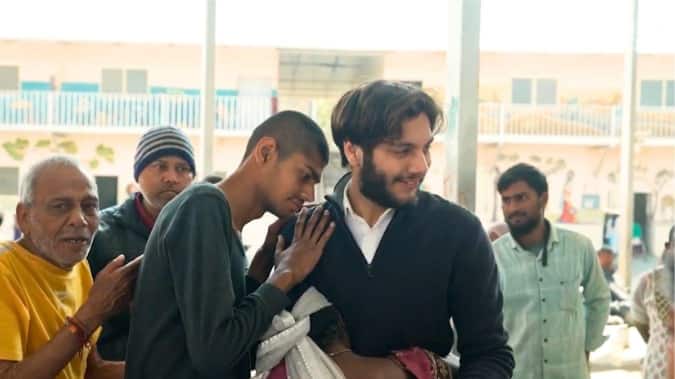
Much of India’s social sector operates through short-term relief initiatives, but certain challenges require sustained institutional responses. One of these is the growing number of elderly and vulnerable individuals who no longer have family support or access to stable care systems.
The Earth Saviours Foundation, a nonprofit organisation based in Gurugram (near Delhi), has developed a model of residential care to address this problem. The organisation currently runs two shelter facilities in Bhandwari and Mandhawar, where more than 1,200 orphaned and abandoned people are staying, with food provided and medical supervision.
Jas Kalra, the foundation’s President, runs a long-term operation that goes beyond rescue interventions into setting up and maintaining infrastructure for residential care. The organisation has rescued and sheltered more than 1,500 people from difficult circumstances and reunited more than 3,000 people with their families post-rehabilitation, according to Kalra.
While rescue efforts often draw public attention, practitioners in the sector note that the more complex challenge lies in sustaining care systems for those who require long-term support. Age-related illness, disability, and the absence of family networks frequently make institutional care the only viable option.
The organisation also carries out dignified last rites for unclaimed people. According to unverified accounts, Kalra has carried out the cremation of more than 3,000 unclaimed bodies, pointing to gaps in the formal support system for vulnerable and disenfranchised people.
Maintaining such facilities requires continuous coordination, trained caregivers, medical partnerships, food supply chains, and infrastructure upkeep. Unlike short-term interventions, residential care operates as an ongoing system rather than a time-bound service.
As India’s population ages, and continued migration to cities affects the traditional family unit, there will be a growing need for long-term care facilities. The organisation has already put a plan for a larger facility that can host up to 5,000 people in the future.
For organisations working in this space, the challenge is not only to respond to immediate need but to build systems capable of providing sustained support over time, a transition that may define the next phase of India’s social care infrastructure.