



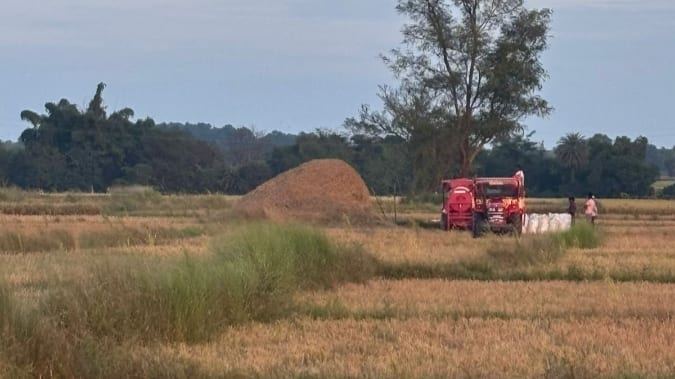
LongStraw Carbon, an India-based climate technology company, is transforming agricultural waste, primarily rice husk, into high-value products while delivering verifiable and durable carbon removal. By processing rice husk, a widespread byproduct of the paddy industry, the company produces industrial-grade biochar, bio-oil, and syngas, offering a scalable solution that addresses waste management challenges, generates clean energy, and supports India’s net-zero and circular economy goals.
The company is expanding its footprint in Odisha, eastern India’s rice-producing heartland, with two 50-tonnes-per-day biochar plants. One facility is being established in the historically drought-prone district of Kalahandi, while the other is coming up in the industrial centre of Sambalpur. Together, these plants will process more than 30,000 tonnes of rice husk annually, converting a long-standing environmental and social challenge into a source of economic value.
LongStraw’s operating model is built around scale, reliability, and circularity. The company has entered into long-term agreements with local farmers and rice millers to secure a steady, homogeneous, and ethically sourced supply of rice husk. The production process generates syngas alongside biochar, creating a closed-loop system in which syngas powers thermal operations at mills, while biochar is used in fertilisers and soil remediation.
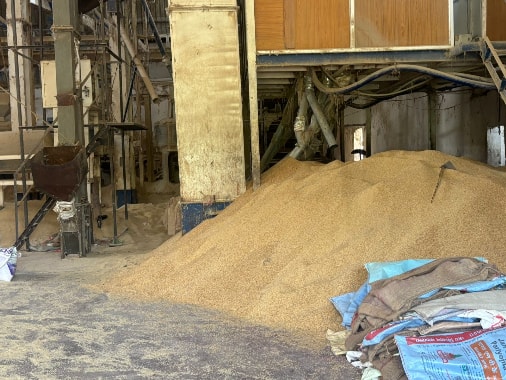
At the core of this system is LongStraw’s proprietary Staged Thermal Stabilisation (STS) technology, deployed through its Riceloop™ initiative, which is specifically engineered for rice husk. Riceloop™ fine-tunes pyrolysis parameters to maximise yields of biochar, bio-oil, and syngas, overcoming challenges unique to rice husk such as high ash content, while enabling scalable production without compromising output quality.
Beyond agriculture, biochar produced by LongStraw has promising applications in infrastructure and construction, where it can enhance material stability, reduce costs, and improve environmental performance. The company’s projects also deliver tangible social and economic benefits. In Kalahandi and Sambalpur, LongStraw is generating local employment across plant operations, logistics, and maintenance, while offering farmers higher incomes through premium payments for husk supply. Improved soil health and higher crop yields further support smallholder farmers and strengthen local agricultural systems.
The environmental impact is equally significant. Kalahandi and Sambalpur are ecologically sensitive regions, and open burning of rice husk has long been a major source of particulate pollution affecting air quality, river systems, and wildlife corridors. By diverting agricultural waste from open burning, LongStraw’s model reduces pollution and eases pressure on fragile ecosystems. This dual benefit supports biodiversity conservation while enabling the generation of high-integrity carbon removal credits for global markets.
LongStraw Carbon’s expansion in Odisha underscores how climate technology can successfully integrate commercial viability with environmental and social impact. By bridging innovation, sustainability, and rural development, the company offers a compelling example of how India’s green transition can be both economically empowering and globally relevant, positioning the country at the forefront of agri-waste valorisation and climate-smart industrial growth.